
FHO vs Total Hip Replacement in Dogs
If your dog has been diagnosed with hip dysplasia or has had a serious hip injury, you may have been offered two common surgical options:
➡️ Femoral Head and Neck Ostectomy (FHO)
➡️ Total Hip Replacement (THR)
These sound clinical, but we’re here to explain exactly what they mean — and why rehabilitation is crucial no matter which option your dog has.
What’s Actually Going on in the Hip?
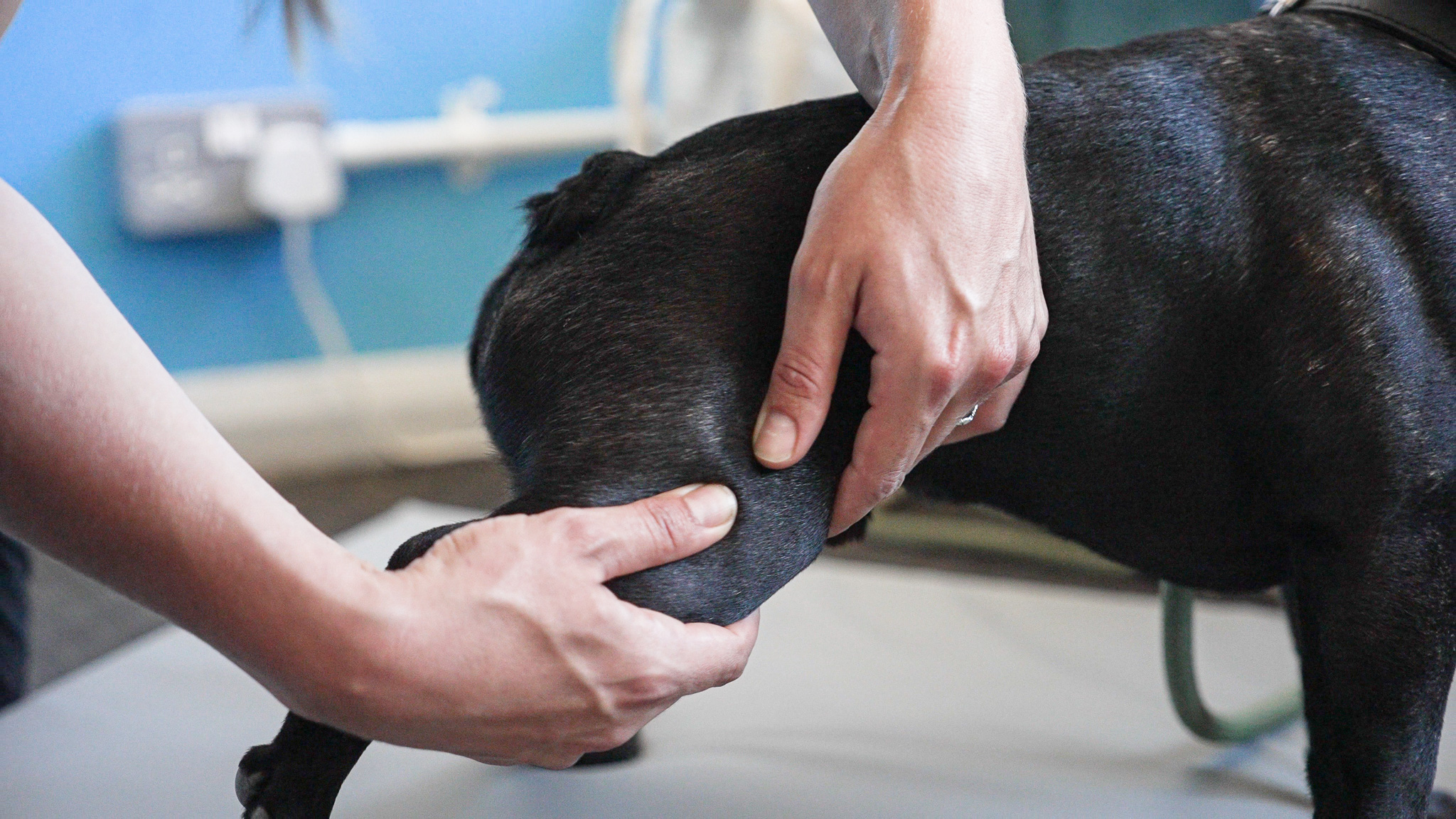
The hip is a ball-and-socket joint. When the ball (top of the femur) doesn’t sit properly in the socket (part of the pelvis), it causes pain, instability, and long-term joint damage — often seen in conditions like hip dysplasia or after trauma.
That’s where surgery helps. But not all surgeries are created equal…
Option 1: FHO (Femoral Head and Neck Ostectomy)
In an FHO, the ball of the hip joint is removed entirely. Instead of a bone-to-bone joint, the dog forms a “false joint” made of scar tissue and muscle. It sounds dramatic — but it works, especially for smaller dogs.
Best For:
- Small to medium breeds
- Dogs with advanced arthritis or fractures
- Owners looking for a cost-effective solution
- Dogs not suitable for implants or invasive surgery
Keep In Mind: FHO doesn’t “replace” the hip — it relies on the surrounding muscles to stabilise the joint. That’s why a strong rehab plan is absolutely essential for success.
Option 2: Total Hip Replacement (THR)
This procedure replaces both the ball and socket of the hip with prosthetic components, aiming to restore the joint’s original function.
Best For:
- Larger or giant breed dogs
- Younger dogs with severe hip dysplasia
- Dogs who need full, active mobility restored
- Owners aiming for long-term performance
Keep In Mind: Even though the joint is replaced, your dog still needs to retrain their body — how to walk, stand, climb stairs, and move without compensation.
Why Rehabilitation Is Non-Negotiable
No matter the surgery type, post-op physiotherapy is critical. Without it, dogs are more likely to:
- Avoid using the leg properly
- Lose muscle mass
- Develop poor movement patterns
- Revert to stiffness or fear of movement
- Struggle with long-term pain or lameness
What Rehab Looks Like After Surgery
Here’s a rough idea of what your dog’s recovery journey might look like with our team:
Weeks 1–2:
- Pain management & gentle movement
- Passive range-of-motion techniques
- Encouraging early use of the limb
Weeks 3–6:
- Targeted strengthening exercises
- Proprioception & balance training
- Underwater treadmill (if appropriate)
Weeks 6–12+:
- Return to daily functions: stairs, play, walks
- Advanced exercises for coordination and control
- Ongoing monitoring and lifestyle support
So, Which Surgery Is Right for Your Dog?
That depends on:
- Breed, size, and age
- Level of pain and mobility
- Lifestyle and long-term goals
- Any underlying health conditions
We work closely with your vet or orthopaedic specialist to help you make the best decision — and more importantly, to support your dog before and after surgery.
So, Which Surgery Is Right for Your Dog?
That depends on:
- Breed, size, and age
- Level of pain and mobility
- Lifestyle and long-term goals
- Any underlying health conditions
We work closely with your vet or orthopaedic specialist to help you make the best decision — and more importantly, to support your dog before and after surgery.
Contact Us
- 07300 020 514
- bookings@apolloanimalphysio.com
- apolloanimalphysio@gmail.com
- Apollo Animal Physiotherapy, Old Haine Road, Ramsgate, CT12 5AG