
Why Strength is the Key to a Stable Canine Hip Joint
It’s Not Just About the Bones — It’s the Muscles That Make the Difference
When we think about hip problems in dogs, we often focus on bones — things like dysplasia, arthritis, or joint laxity. But the real game changer isn’t just in the structure of the joint — it’s in the strength of the muscles that surround and support it.
Whether your dog is young and newly diagnosed, recovering from surgery, or starting to slow down with age — strengthening is the single most important thing we can do to help them feel stable, confident, and pain-free.
So, What’s Actually Wrong With the Hip?
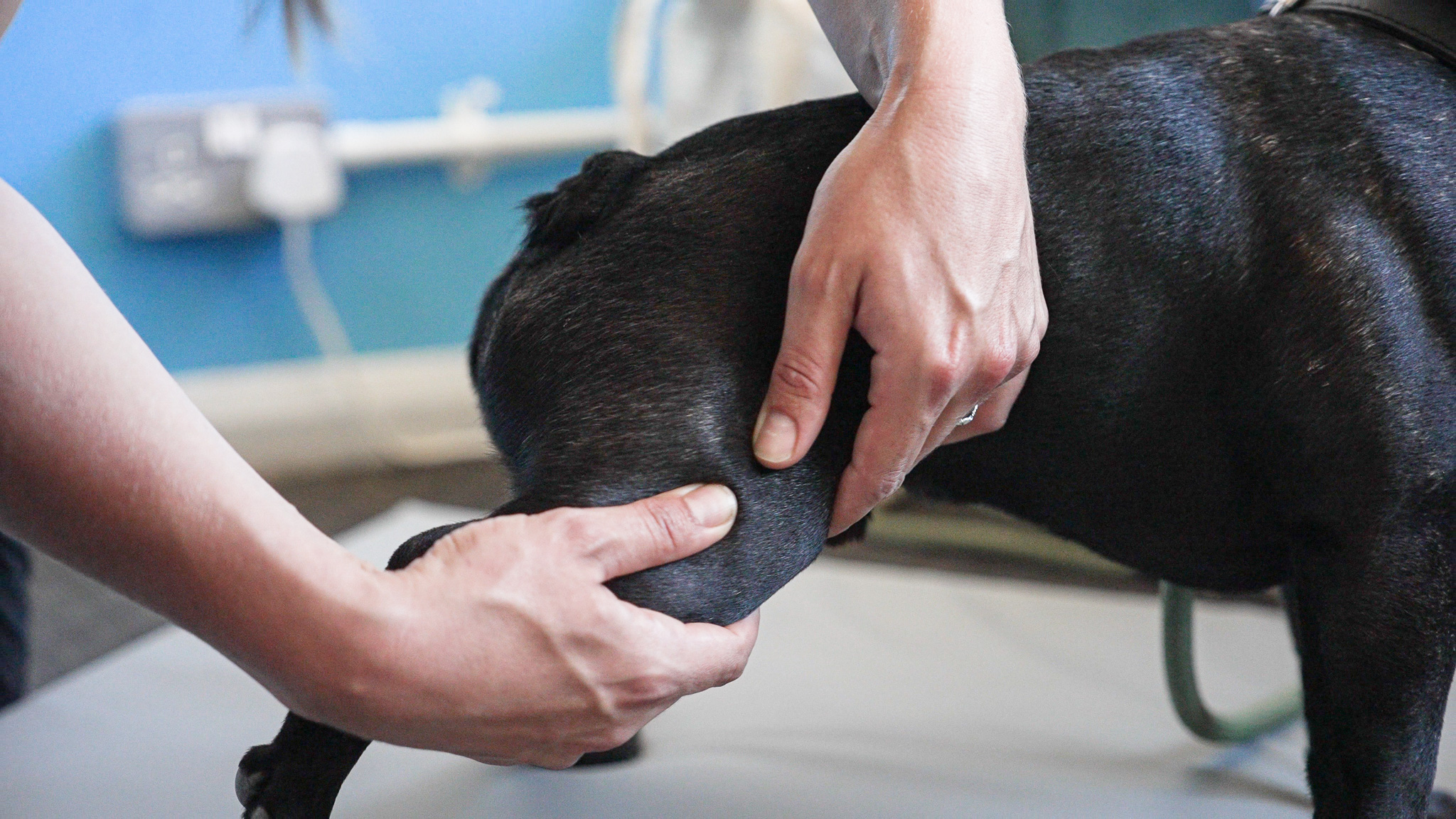
The hip joint is a ball and socket. Ideally, the “ball” (head of the femur) fits snugly into the “socket” (the acetabulum) and is held in place by a combination of ligaments, cartilage, and surrounding muscles.
In conditions like:
- Hip dysplasia – where the socket is too shallow or the ball is loose
- Arthritis – where inflammation and joint changes cause pain and stiffness
- Post-surgical cases – like after a Femoral Head Ostectomy (FHO) or Total Hip Replacement
…the joint becomes unstable. This causes pain, compensation, and reduced movement — unless we take proactive steps to stabilise it.
Why Strength is the Game-Changer
Ligaments and bones can’t do it all — they provide passive support.
But muscles?
They offer active, dynamic stability.
This means: the stronger your dog’s muscles are, the more control they have over their own movement, and the less stress goes through the joint itself.
Well-developed muscle acts like a brace — holding the hip in better alignment, absorbing impact, and reducing the risk of further damage.
Which Muscles Matter Most?
When it comes to stabilising the hip joint, we’re especially focused on:
- Gluteal muscles – These are the powerhouse of the hip; they stabilise the joint during walking, running and standing.
- Core muscles – Yes, dogs have core muscles too! A strong core reduces sway and helps balance.
- Hamstrings and quadriceps – They control movement and protect the joint from excessive loading.
Together, these muscles form a supportive network that allows your dog to move more efficiently, with less pain and more confidence.
What Next?
If your dog has a hip condition, is post-surgery, or just isn’t moving quite right, now’s the time to act. You don’t need to wait for things to get worse.
Let’s help your dog feel strong, steady, and pain-free again — one rep at a time.
The Real Power: Strength = Confidence
When a dog feels physically strong and supported, you can see it in their body language:
- They stop hesitating before movement
- They choose to play again
- They explore their environment more freely
- They regain independence
This confidence doesn’t come from painkillers or rest — it comes from rebuilding their body in a safe and structured way.
How We Build Strength Safely
At Apollo, we don’t believe in generic advice like “more walks” or “just let them run.”
We use a structured and progressive approach to build functional strength that actually supports your dog’s hip.
A typical strength-based programme may include:
- Targeted therapeutic exercises (on land and in water)
- Controlled incline and decline walking
- Sit-to-stand reps for glute activation
- Core stability work using wobble cushions or physio balls
- Manual therapy to release tension and activate dormant muscles
Every plan is tailored to your dog’s age, diagnosis, movement pattern and goals.
What Happens Without Strength?
Without proper strengthening, dogs often:
- Shift weight away from the painful hip
- Overuse the spine, front limbs or opposite leg
- Lose muscle tone over time
- Become unstable on uneven ground or during transitions (e.g. standing up, turning)
- Show signs of fatigue or stiffness after short walks
Eventually, this compensation leads to secondary problems — from back pain and muscle tightness to arthritis in other joints.
Contact Us
- 07300 020 514
- bookings@apolloanimalphysio.com
- apolloanimalphysio@gmail.com
- Apollo Animal Physiotherapy, Old Haine Road, Ramsgate, CT12 5AG